
MIT Simplifying invention disclosure and case management
MIT’s Technology Licensing Office needed to replace a dated system serving two very different groups: researchers disclosing new work and licensing officers managing each case. I led the product-design work that translated their connected workflows into distinct experiences for each audience.
- Role
- Senior Product Designer in a two-person design team
- Responsibilities
-
- Product direction and stakeholder alignment
- User research and workflow analysis
- Cross-platform design and accessibility
- Prototyping, validation and design quality
ONE WORKFLOW, TWO VERY DIFFERENT EXPERIENCES
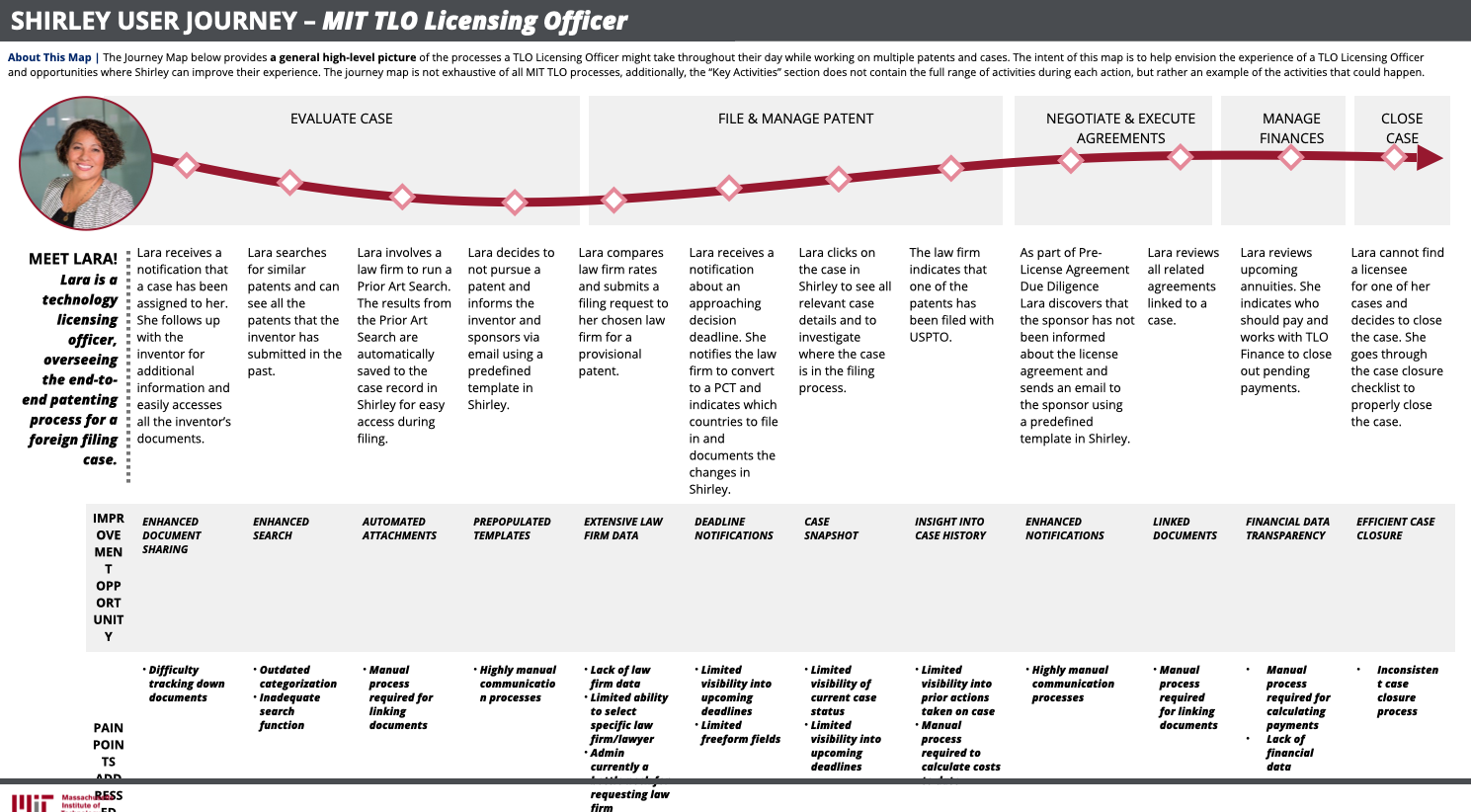
The disclosure process connected two fundamentally different experiences. Researchers and authors needed a clear way to choose the right disclosure, provide the required information, involve co-inventors, and submit their work. Technology Licensing Office staff then needed to assess its potential, coordinate with attorneys, track filings and deadlines, manage agreements and finances, and close the case.
The existing tools were difficult for both groups to navigate. Occasional users had to interpret a specialised process with little guidance, while licensing officers relied on a rigid system and manual workarounds. The challenge was larger than improving individual screens: we had to clarify the hand-off between disclosure and case management without forcing both audiences into the same experience.
RESEARCH THAT SHAPED THE PRODUCT DIRECTION
I led the design effort within a two-person team, working with business analysts, engineers, stakeholders, researchers, administrative users, and licensing staff. Interviews and workflow analysis moved the conversation beyond feature requests and revealed where the existing process created confusion, duplicated effort, and avoidable support.
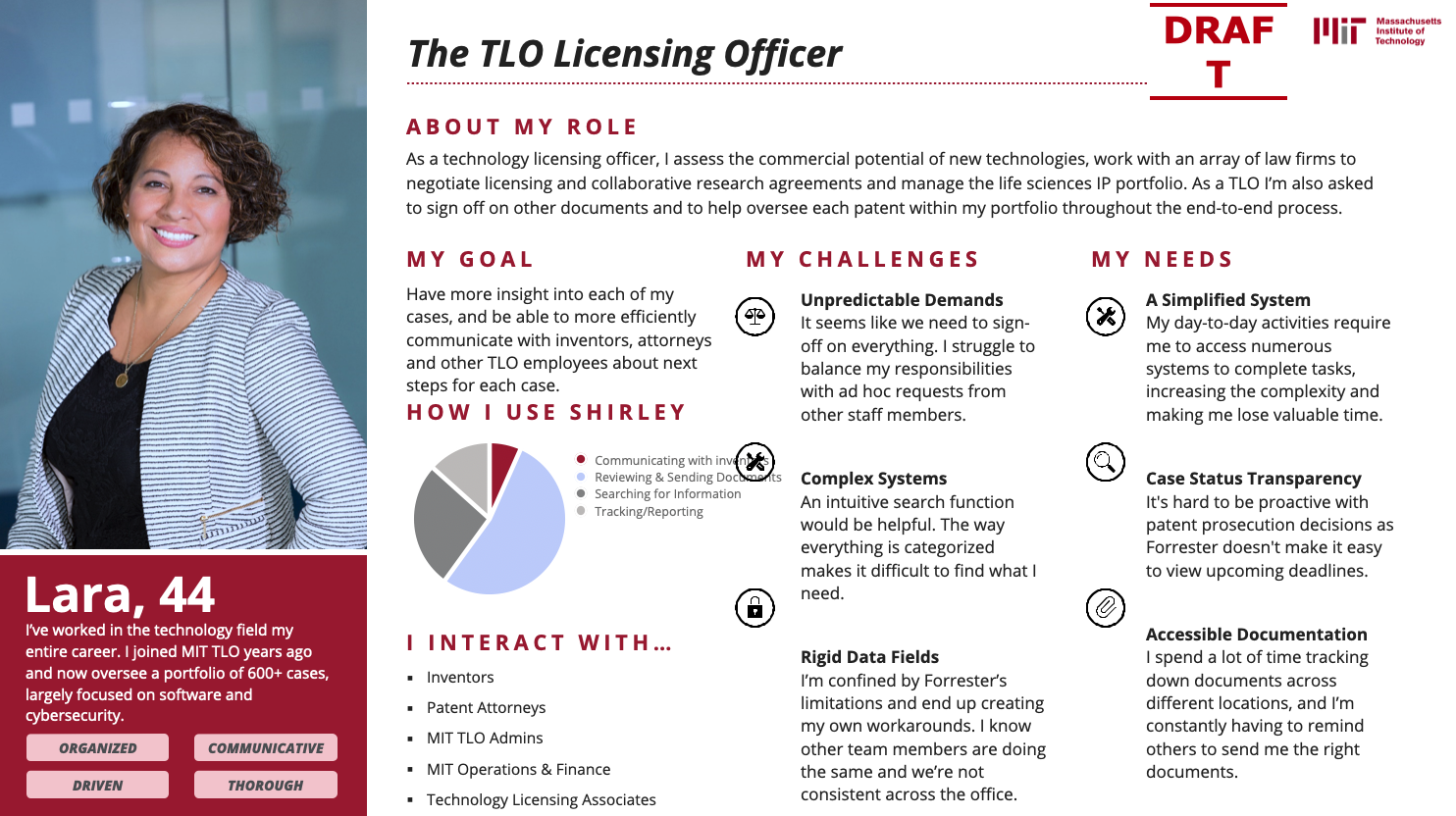
I translated the research into personas, end-to-end journeys, and task flows the wider team could use to make product decisions. The licensing-officer journey showed that disclosure was only the entry point to a case spanning people, documents, deadlines, agreements, and finances. This broader view aligned stakeholders around priorities and kept us focused on the whole service rather than an isolated form.
ONE SERVICE, TWO PRODUCT DIRECTIONS
The research made it clear that one interface should not try to serve every user. Through workshops with MIT stakeholders, key researchers, and the MIT UX team, I helped shape a cross-platform experience for researchers and inventors across iOS, Android, and Web, while the administrative workflow moved into Salesforce.
This was one service with two appropriate product directions. Researchers needed guidance through an unfamiliar, occasional task; licensing staff needed dense case information, repeat actions, and portfolio-level oversight. The admin persona and journey on this page informed the data, hand-offs, and requirements across that service. The screens that follow focus on the researcher experience because that was the custom interface being designed, not because the administrative experience was secondary.
FROM WORKFLOW TO PRODUCT EXPERIENCE
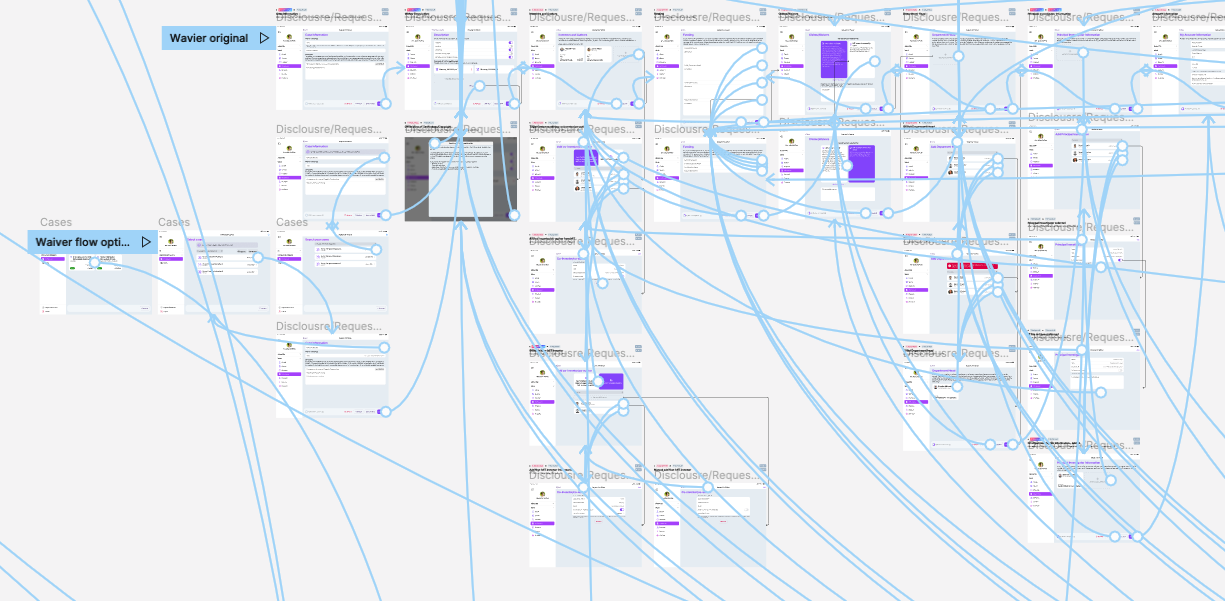
I moved between rough sketches, low-fidelity wireframes, and interactive prototypes to make complex workflow decisions tangible for users and stakeholders. Working with business analysts and engineers throughout the process helped us test assumptions early, resolve edge cases, and balance user needs with the operational and technical realities of delivery.
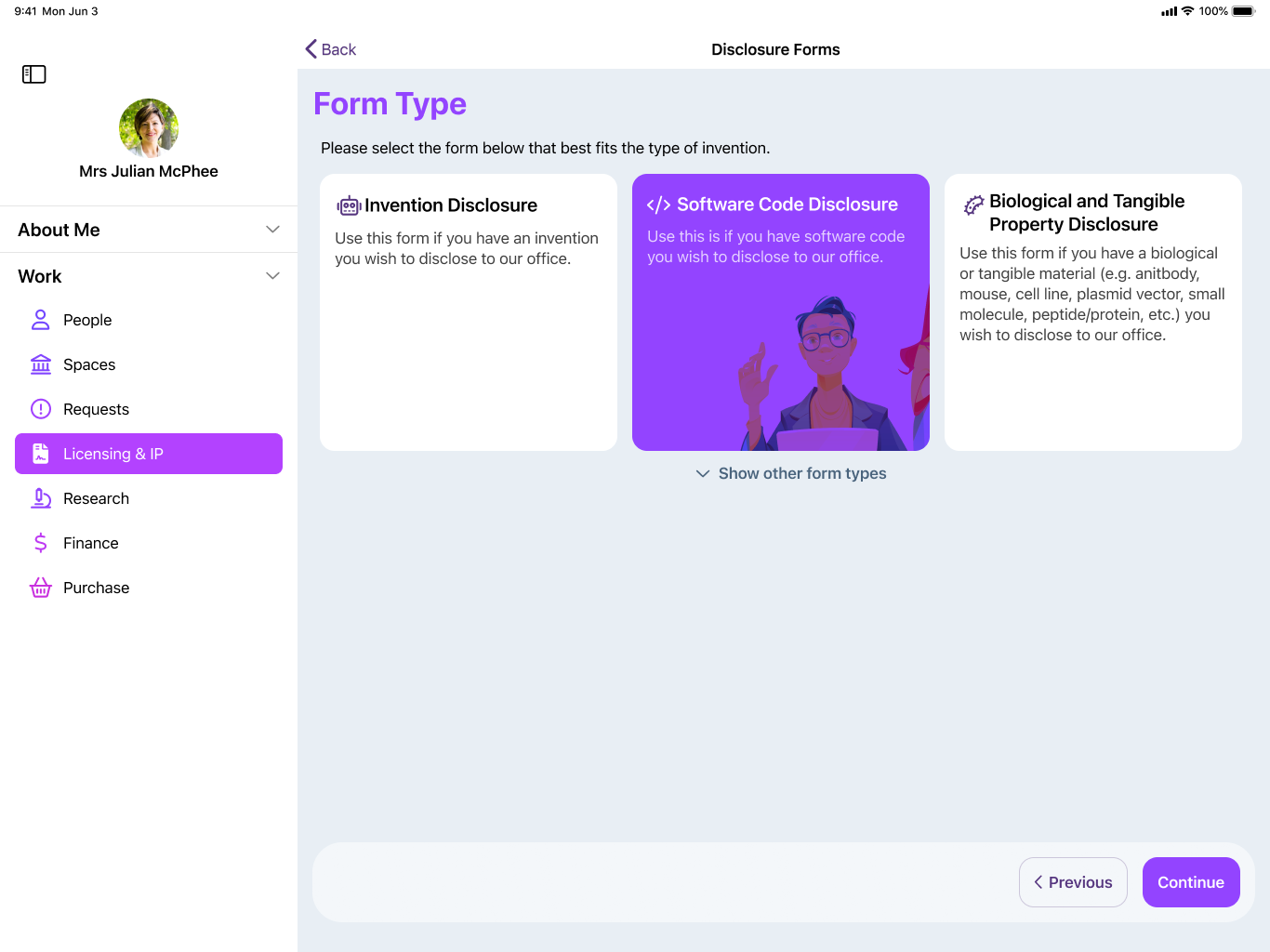
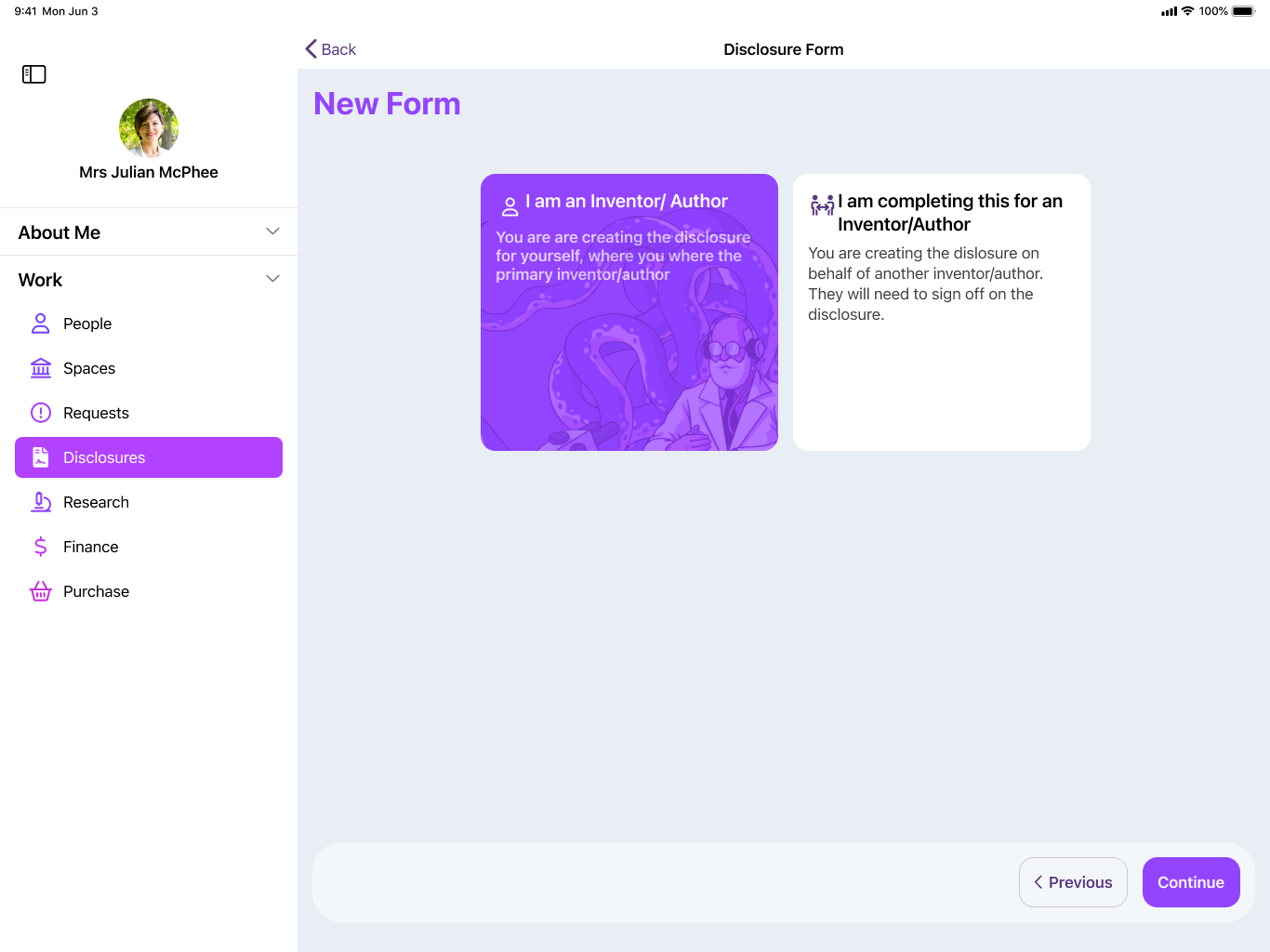
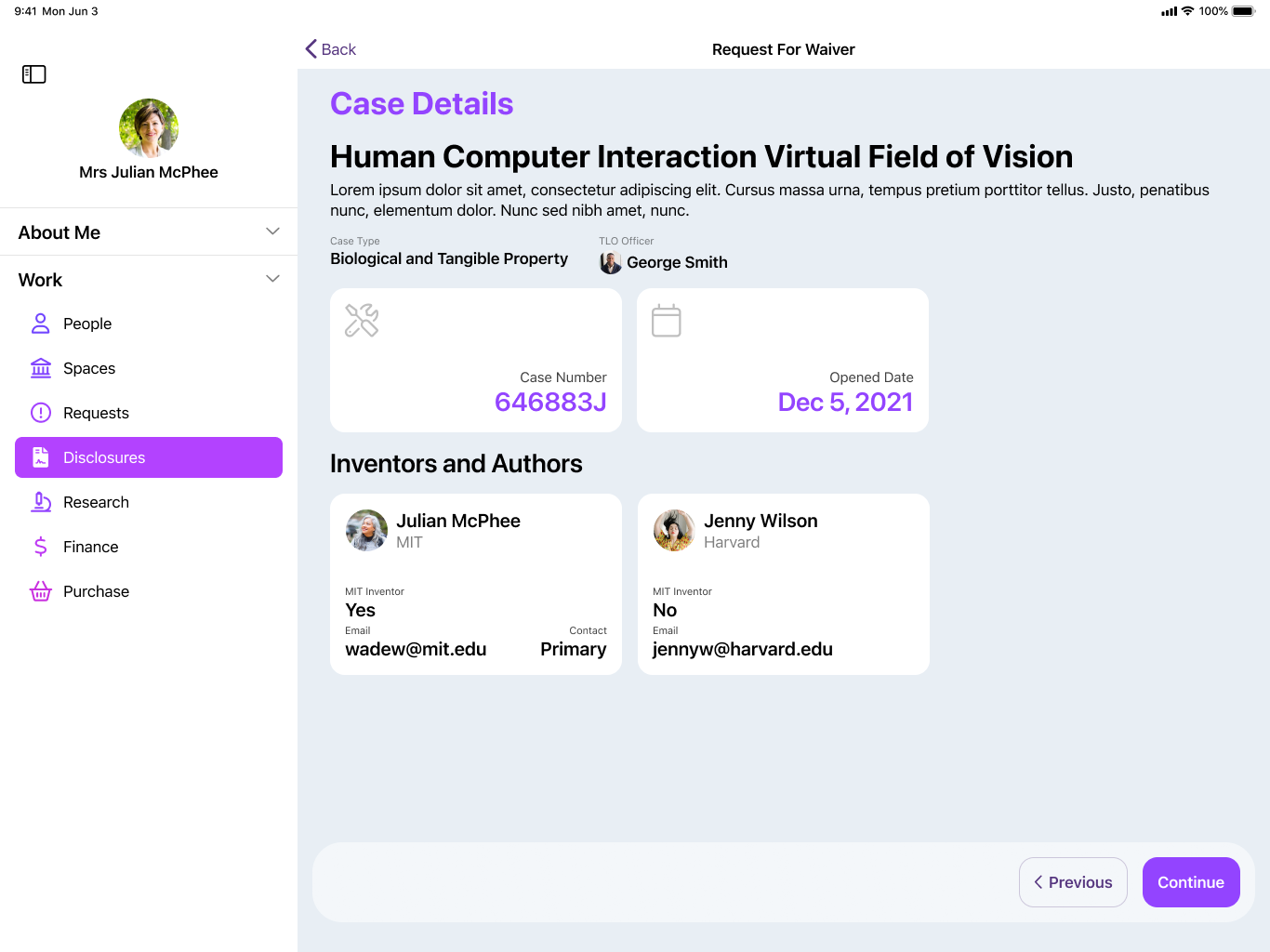
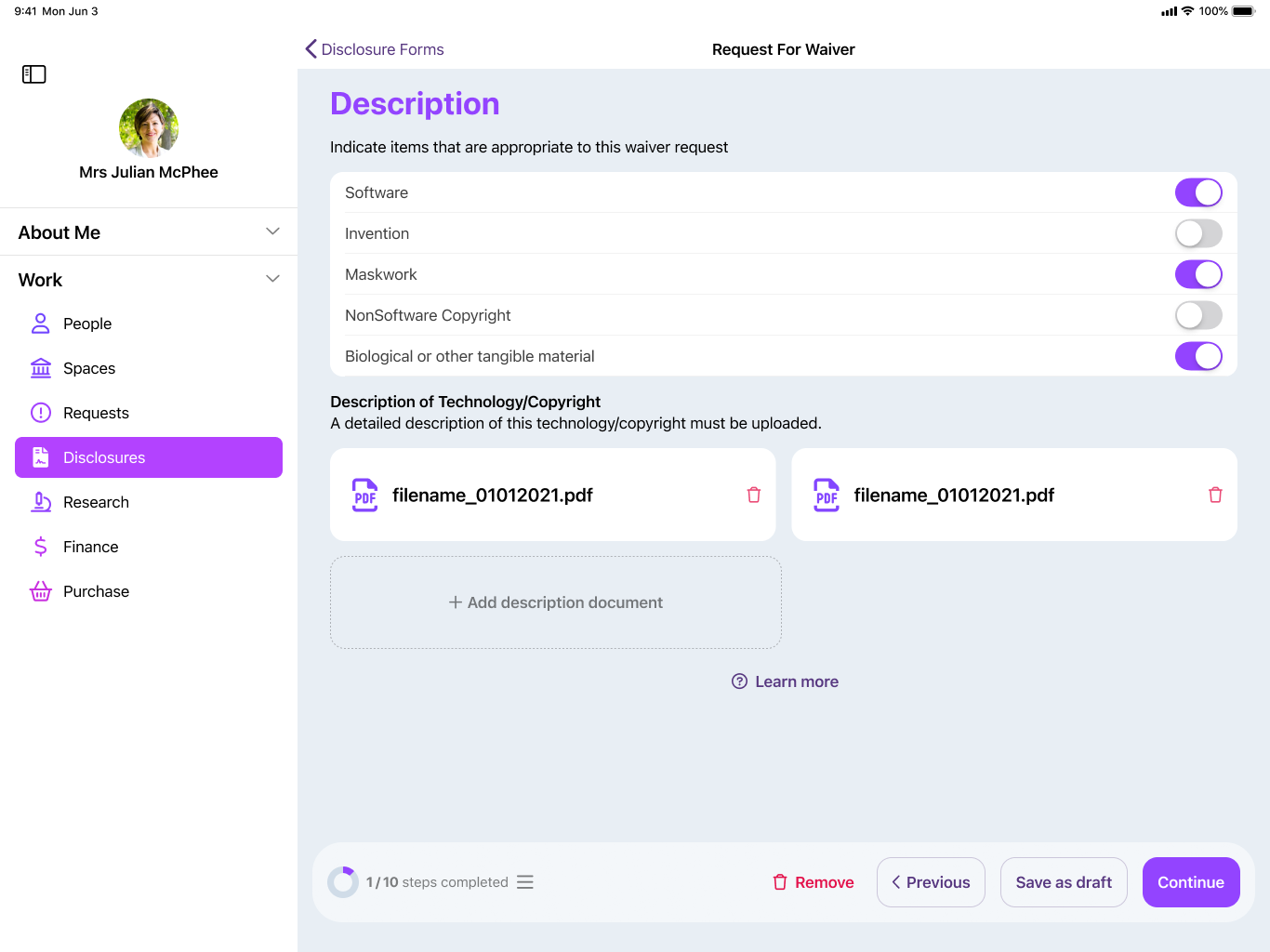
The resulting experience guided researchers toward the correct disclosure route and broke a demanding process into predictable, saveable steps. I used consistent patterns for selection, progress, case summaries, document handling, and navigation so that the product remained coherent across iOS, Android, and Web. These patterns also contributed to the shared design language used across MIT products.
ACCESSIBILITY AS A PRODUCT REQUIREMENT
Accessibility was considered throughout the work, not left for a final review. MIT’s relationship with U.S. government partners made WCAG and Section 508 expectations an important part of the design context, especially for a cross-platform service built around long, information-heavy forms.
I focused on logical heading and focus order, clear labels, readable contrast, generous interaction targets, and guidance that did not rely on colour alone. Predictable steps, visible progress, and the ability to save and return also reduced cognitive load without removing information the Technology Licensing Office required.
VALIDATION, DELIVERY AND OUTCOME
I used prototype testing with intended users to validate the product direction as well as the interaction details. Findings were brought back to stakeholders, business analysts, and engineers, then translated into revisions to the workflow, interface, and delivery priorities. This kept design connected to implementation instead of ending at hand-off.
After launch, support queries about logging a disclosure fell by 68%. The proportion of new disclosures arriving with the correct information and completed in the expected way also improved substantially, reducing avoidable follow-up for the administrative team.
The work did not end at release. I continued interviewing key users in production to learn how the new process behaved in day-to-day use and whether their needs had changed. Those conversations created a feedback loop for further refinement rather than treating launch as the finish line.